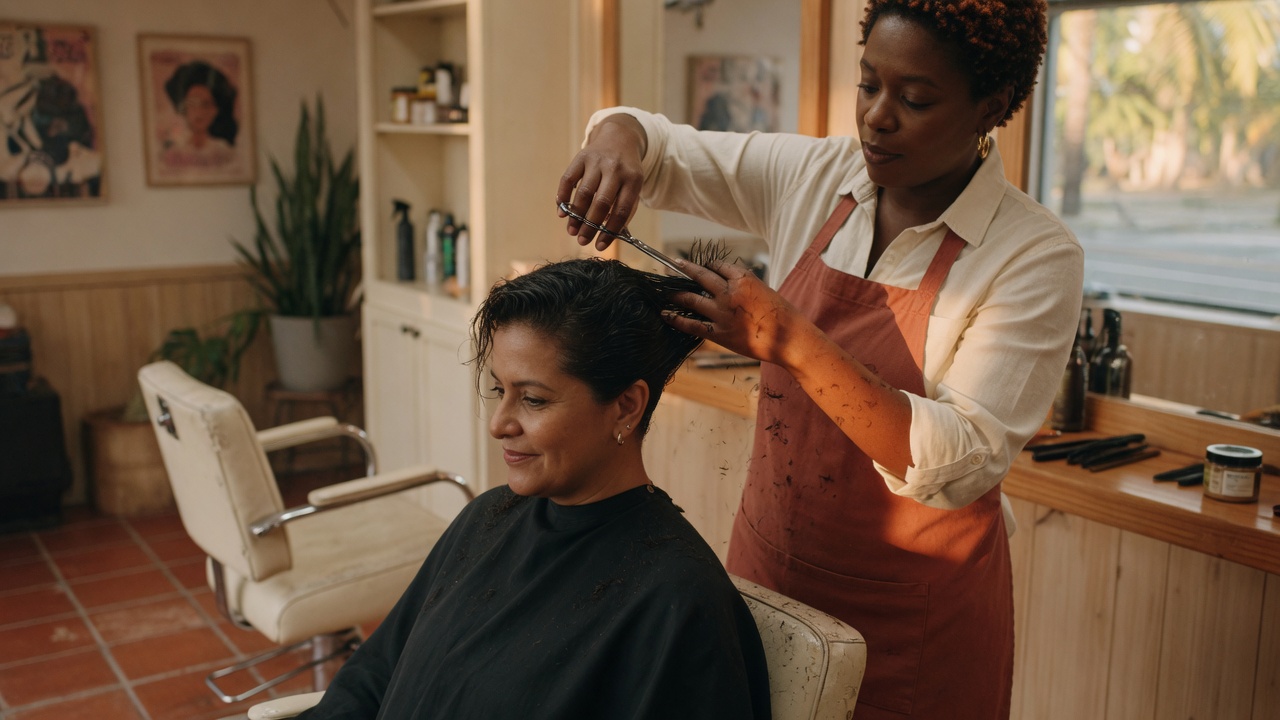

Salons and spas have something most businesses would pay a lot for: a natural, predictable emotional peak built into every appointment. The moment when a client looks in the mirror and loves what they see is one of the highest-satisfaction moments in any service industry. Most salons don't capitalize on it for reviews. Here's how to change that.
The Mirror Moment as the Ideal Review Trigger
There is a specific moment in a salon appointment when the client is at peak happiness. The stylist has just finished, they're looking at themselves in the mirror, they're thrilled, and they're about to get up and go live their day feeling great.
That's the moment to ask.
Not at checkout. Not in a text you send an hour later. Right then, when the stylist turns the chair or hands them the mirror for the final look.
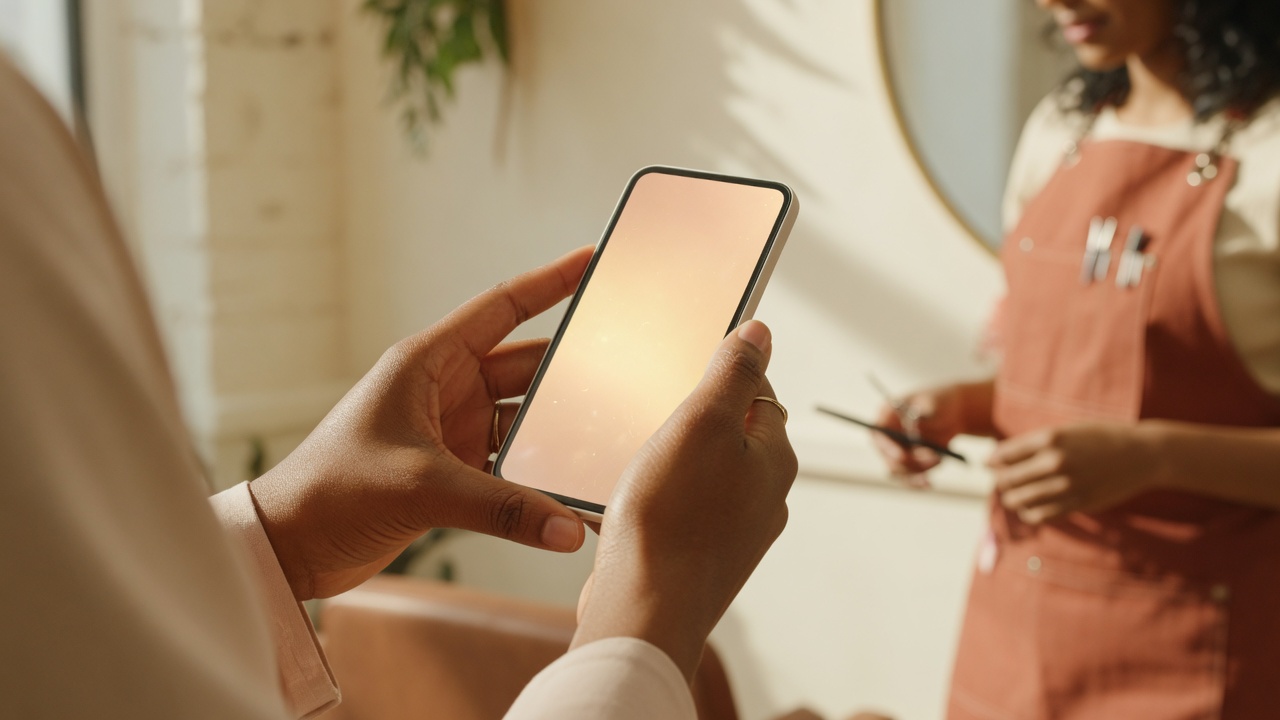
A natural, two-sentence ask works: "I'm so glad you love it! If you ever feel like leaving a Google review, it really helps us. I can text you the link." Then follow up with the text as they check out.
This is effective because it happens while the positive emotion is at full intensity, it comes from the person who created the experience (the stylist, not a front desk stranger), and it frames the review link as a convenient option rather than an obligation.
Booking Confirmation and Post-Appointment Text Sequence
A two-step digital sequence reinforces the in-person ask:
Step 1: Booking confirmation text. When a client books, send a confirmation that mentions your Google or Yelp profile. Keep it subtle: "Your appointment is confirmed for date/time with Stylist. We look forward to seeing you! P.S. If you've been with us before, we love hearing from you: link." This primes returning clients without pressuring new ones.
Step 2: Post-appointment text. Send this 1 to 2 hours after the appointment ends (most booking software records appointment end times, which automates this trigger). Keep it short: "Thanks for coming in today, Name! Hope you're loving your new look. If you have 2 minutes, a Google review would mean the world to us: link."
The combination of in-chair ask and timely follow-up text consistently produces higher review conversion rates than either approach alone. The in-chair ask plants the intention; the text provides the frictionless path to act on it.
Stylist-Specific Reputation vs. Salon Brand
An often-overlooked dynamic in salons: clients don't just have loyalty to the salon, they have loyalty to specific stylists. "I go to Maria at Salon Name" is a real customer identity.
This creates an opportunity and a risk.
The opportunity: reviews that mention stylists by name are more persuasive than reviews of the salon in the abstract. "Maria gave me the best balayage I've ever had" is more compelling to a prospective client than "great service." Encourage stylists to develop their own review relationships with clients.
The risk: when a popular stylist leaves, they take their reviews with them in the client's mind, even though the reviews stay on your Google profile. Build the salon brand in your review strategy, not just individual stylist recognition.
A practical balance: encourage stylist mentions in reviews, but make sure the ask always comes from the salon as the entity, not the individual stylist. "Please leave us a Google review for Salon Name" keeps the review equity with the business.
Video Testimonial Opportunities in Beauty
The beauty industry is uniquely suited to video testimonials because of the visual transformation element. A before-and-after photo alongside a customer's voice talking about their experience is compelling content that serves double duty: as a review on social media platforms and as social proof on your website.
How to capture it:
- Ask the client at the mirror moment if they'd mind doing a quick 30-second video for your Instagram or website. Many happy clients say yes in that peak-satisfaction moment.
- Film with the phone in a vertical format so the content is Instagram-ready.
- Get verbal consent on camera by asking them to say their name and confirm they're okay with you sharing the video.
- Post on Instagram and your Google Business Profile photos. Tag the client (with their permission) to extend reach.
Video testimonials don't replace written Google reviews. They serve a different function, social discovery and website conversion rather than search ranking. Use them in addition to, not instead of, a written review strategy.
Managing Reviews That Mention Specific Staff Members
When reviews (positive or negative) mention a specific stylist or technician, your response needs to handle the human element carefully.
For positive mentions: thank the reviewer and, if appropriate, let the named team member know. This creates a positive feedback loop that motivates the team and reinforces that review-friendly behavior is recognized.
For negative mentions: do not name the specific employee in your response. "Our team member" or "our staff" is the right level of specificity. If the review describes specific behavior that warrants an internal conversation, have that conversation privately. Defending or identifying a specific employee in a public response creates more problems than it solves.
The goal of your response to a negative review mentioning staff is not to win the argument publicly. It's to demonstrate to every future reader that you take feedback seriously and handle it professionally.
Salons that build review collection into the natural flow of every appointment, rather than treating it as an afterthought, consistently outperform competitors in local search and new client acquisition. The foundation was already there. You just have to ask at the right moment.
Laudy automates the post-appointment review request for salons and spas, integrating with major booking platforms to trigger requests at exactly the right time. Start free at Laudy.